

Everything You need to know about your Ovaries
The ovary is a crucial organ in the female reproductive system. It plays a central role in the production of eggs (ova or oocytes) to allow conception and the synthesis of hormones essential for your reproductive and overall health.
A Bit More Detail
The ovary is a crucial organ in the female reproductive system. The tissues of the ovary contain and release eggs (ova or oocytes) and produce hormones critical for your menstrual cycle and for fertility. Continue reading to improve your knowledge of this organ and take control of your reproductive health.
Structure of the Ovary
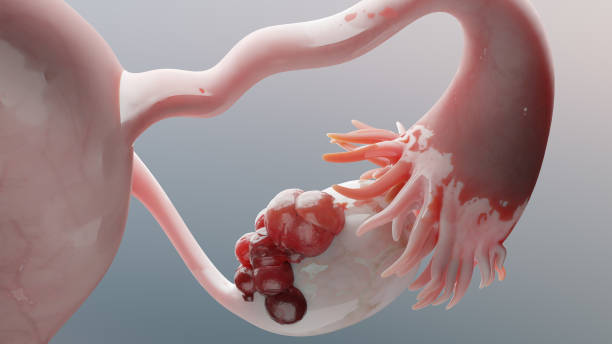
The ovary is usually a paired organ, with one located on each side of your uterus in the pelvic cavity. It’s roughly almond-shaped and measures a few centimetres in length. Who knew something so small could be so important! The outer layer of the ovary is called the ovarian cortex, while the inner portion is the ovarian medulla. Within the ovarian cortex are follicles, all at different stages of development. Mature follicles consist of an oocyte, containing genetic material critical for reproduction, surrounded by granulosa cells. There is a fluid filled space called an antrum, and an outer layer of theca cells. Antral follicles like this are visible on ultrasound imaging of the ovary. It takes approximately three months for an oocyte, which has been genetically arrested within the ovary since birth, to mature into an oocyte like this which may ovulate and could create a pregnancy.
Fun fact!
Did you know you are born with all the eggs you will ever have? In fact, your egg numbers peak at around six million when you are just twenty weeks gestation and still growing in your mother’s uterus (womb). By the time you were born, this number declined to around one to two million, and by puberty your ovaries contain only around 300 to 400,000 eggs. While a small number (around 400) of these eggs are ovulated during your menstrual life, the vast majority are gradually absorbed by your body over time. With time not only does the number of eggs in your ovary decline, but so too does the quality. This leads to a decline in fertility, an increase in miscarriages and chromosomally abnormal pregnancies such as ‘Down’s syndrome’ (trisomy 21). By your early fifties your egg supply will have generally diminished so much that ovulation ceases and you go through the menopause. During these later years, while there still may be a very small supply of eggs in your ovary, the numbers are so small that you won’t experience a menstrual cycle, and so the usual ovarian production of hormones will end almost entirely.
Function of the Ovary
Egg Production (Oogenesis)
The primary function of the ovary is the production of eggs through a process known as oogenesis. When you start puberty, a small number of eggs begin to mature each month. In each menstrual cycle it is usual for only one follicle to reach maturity and the egg inside to be released.
Hormone Synthesis
The ovary is an endocrine organ responsible for producing hormones, primarily estrogen and progesterone. Ovarian hormone production is crucial for the development of secondary sexual characteristics. These hormones play vital roles in regulating your menstrual cycle and maintaining your reproductive health. Estrogen, produced by the granulosa cells, prepares the uterine lining for a potential pregnancy. After ovulation the ovulated follicle forms a structure called the corpus luteum. Progesterone, produced by the cells of the corpus luteum, is vital for the maintenance of the uterine lining and the support of early pregnancy.
Menstrual Cycle
The ovary plays a central role in your menstrual cycle. Your cycle is a complex, sequence of events that occurs roughly every twenty-eight days. It involves the maturation and release of an egg from the ovary (ovulation), preparation of the uterine lining for a potential pregnancy, and either the implantation of a fertilized egg or the shedding of the uterine lining if pregnancy does not occur.
Hormonal Feedback Mechanism
Your ovaries are regulated by a sophisticated hormonal feedback system involving the hypothalamus, pituitary gland, and the ovaries themselves. The hypothalamus releases gonadotropin-releasing hormone (GnRH), stimulating the pituitary gland to release follicle-stimulating hormone (FSH) and luteinizing hormone (LH). FSH and LH, in turn, regulate the growth and maturation of follicles and trigger ovulation.
In summary, your ovaries, through oocyte development and related hormone synthesis play a critical role in your menstrual cycle, the potential for conception, and to your overall health. By learning more about their importance, you can take charge of your health journey and feel confident when engaging with health professionals.